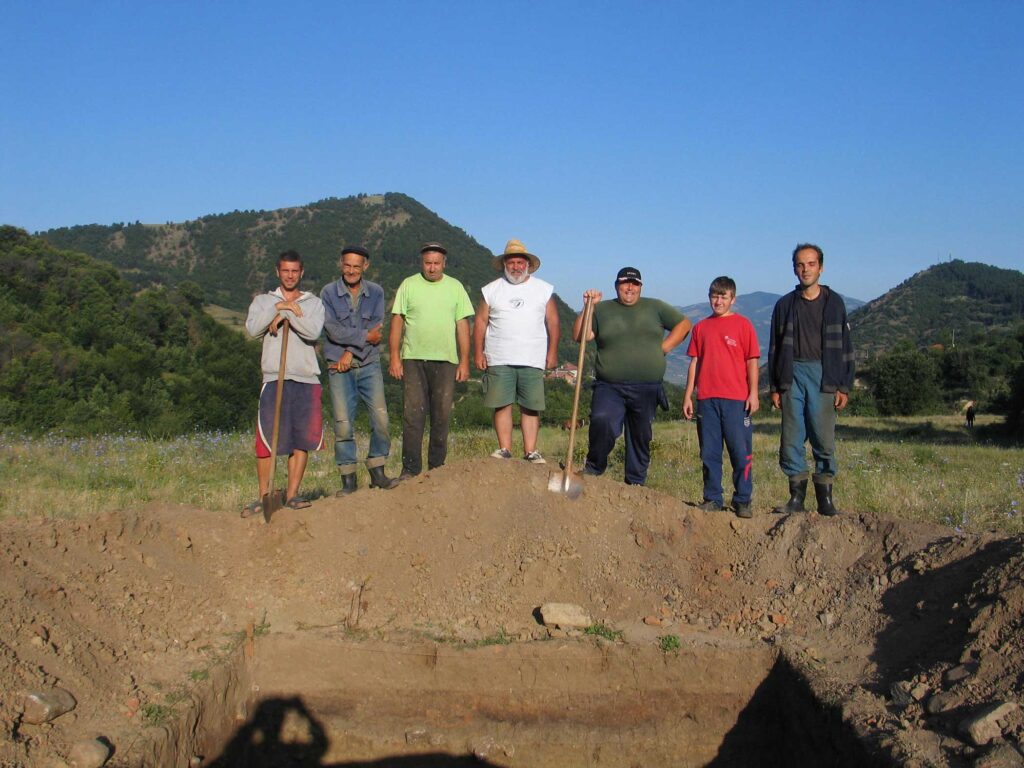
Excavations
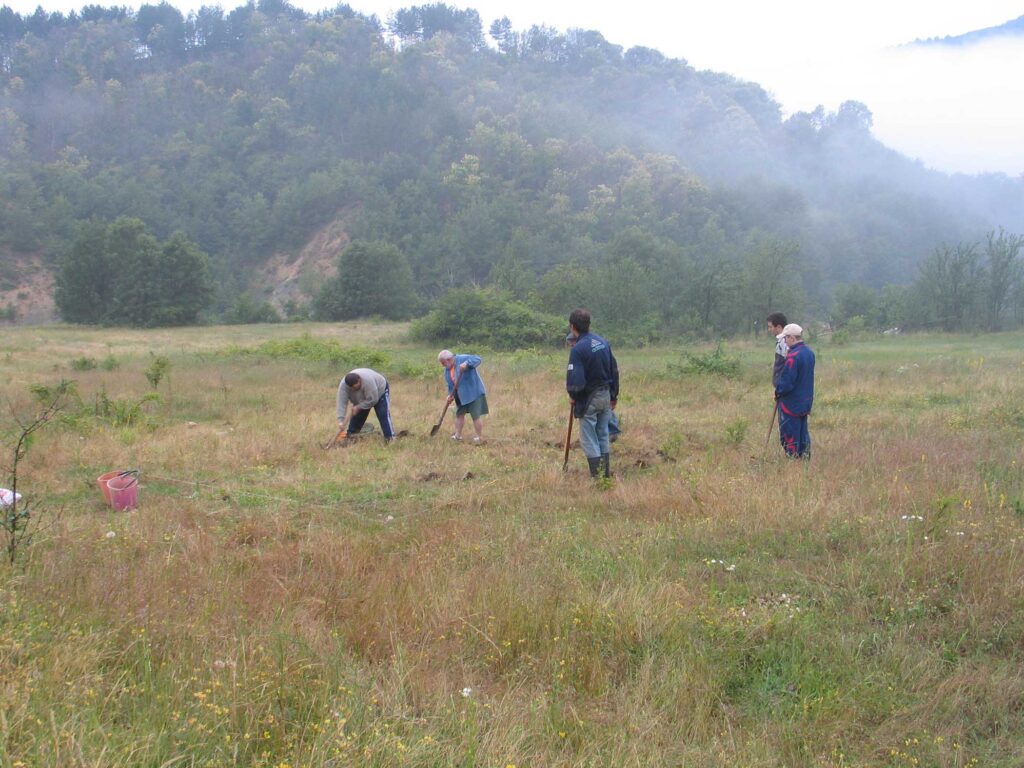
The study of the Early Neolithic settlement near the village of Brezhani in the locality known as Raven (meaning “flat place” in Bulgarian) began in 2009. The excavations took place in two locations: trench 1 was in the western part of the settlement, whereas trench 2 was located some 60m away near the edge of the terrace. The accumulation of anthropogenic debris in trench 1 reached 1.80m, while the deposit in trench 2 slightly exceeded 2.80m.
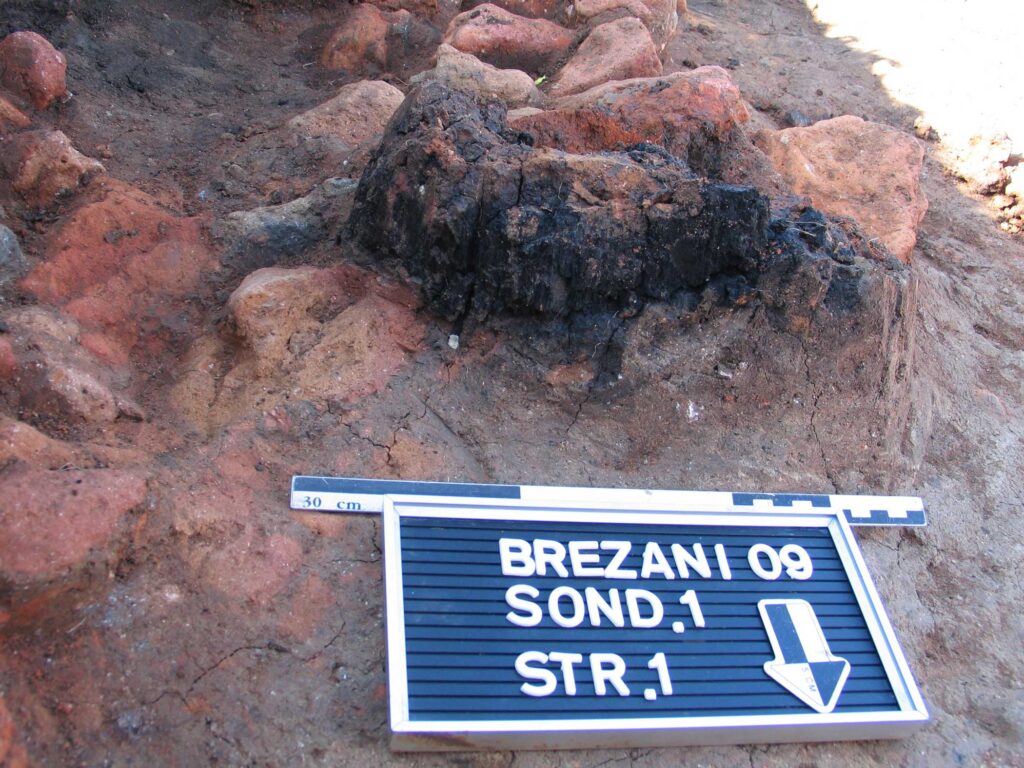
The remains of a burnt house came to light at the very start of the excavations in trench 1. A severe fire sealed its ruins and it provided an opportunity to make interesting observations about its architectural details and the inventory. The most conspicuous feature looks like a raised platform made of split stakes covered by a 0.2m thick layer of clay. The platform had collapsed on the floor sealing eight ceramic pots, a mortar, a grinding stone, and few mysterious rings made of schist underneath.
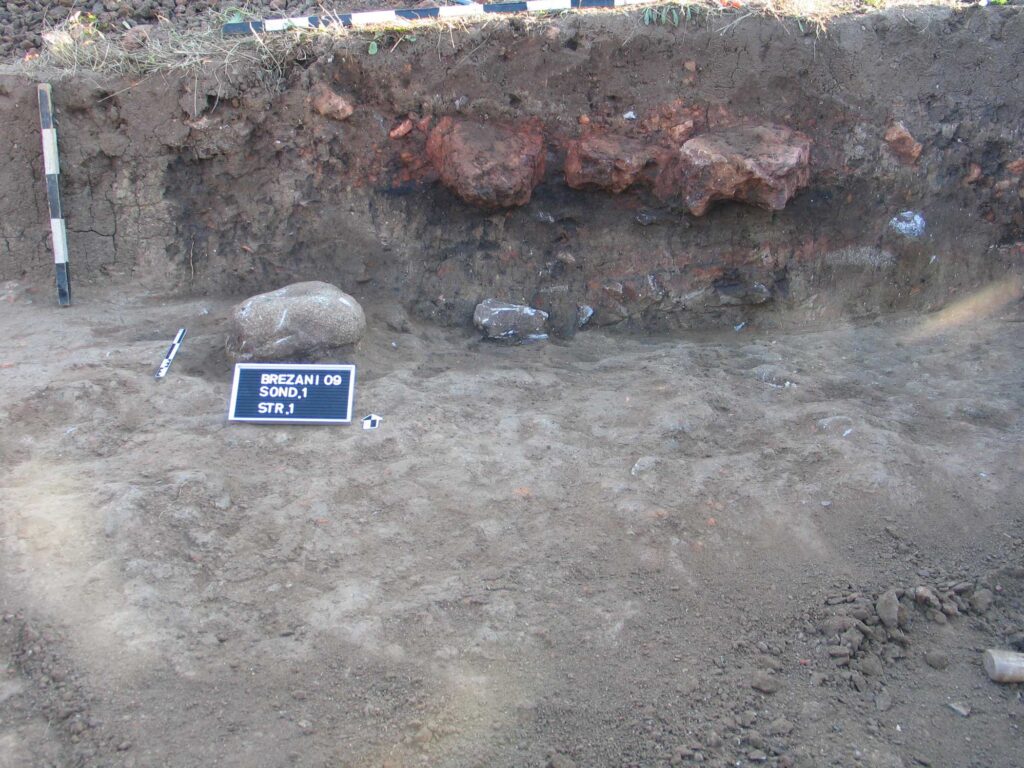
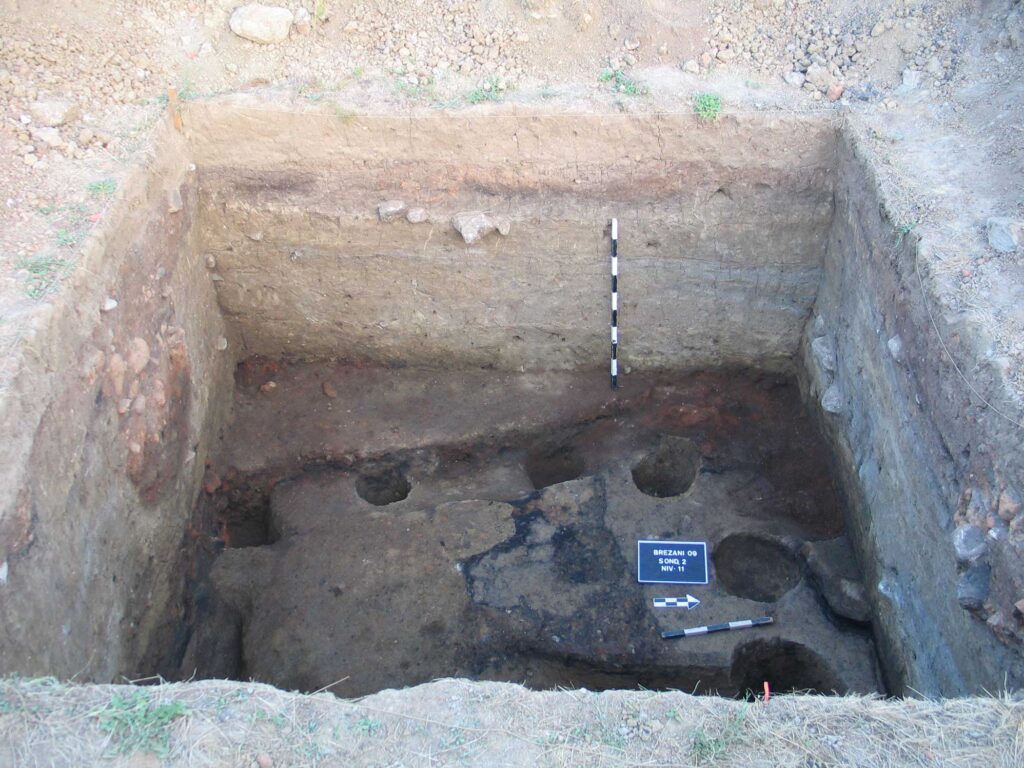
Trench 2 revealed the ruins of another burnt house located close to the surface suggesting that the entire Neolithic settlement likely ended in a conflagration. Deeper down in that trench the remains of an earlier Neolithic house were uncovered that had been likewise burnt. Thus, it seems that in this part of the terrace there was an even earlier settlement similarly destroyed by fire. It must have been of smaller size however, since no trace of it was found in trench 1. Interestingly the remains of the earliest burnt house reveal an early use of the wattle-and-daub construction technique that could still be seen among the last standing examples of local vernacular architecture.
The Neolithic settlements at Raven must have played a significant role in establishing and maintaining cultural contacts in an exchange network encompassing its eastern, western, and northern neighbours, but display considerably limited (if any) contacts to the south.