Excavations
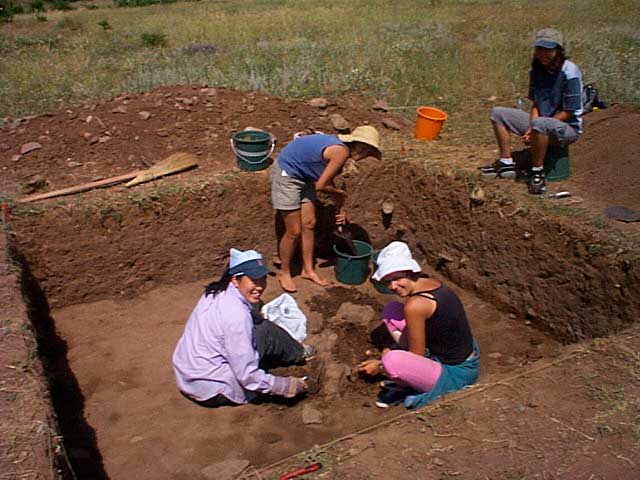
The prehistoric settlement known as Drenkovo-Ploshteko is situated on the first terrace of the Drenkovska River, some 13 km to the west of the Struma River, midway between the villages of Drenkovo and Selishte. It is located at the intersection of two mountain passes – one connecting the Struma Valley to the Vardar to the west, while the other is opening to the fertile Kyustendil Valley to the north, thus circumventing the more impenetrable Skrino Pass. The significance of this route during the Neolithic is underlined by the existence of another two Early Neolithic settlements known as Vaksevo and Nevestino situated on the other side of that pass just 20 km to the north. It is estimated that the Neolithic Ploshteko spread over three hectares which is quite large by Neolithic standards. Three trenches measuring 3×3 meters (trenches 1, 3, 4) and another one measuring 2×3 meters (trench 2) revealed varied thicknesses of anthropogenic deposits ranging from 0.6-2.40 m, and dating to various phases of the Early and Late Neolithic. The stratigraphic sequence varied in each trench.
Early Neolithic layers are identified only in trenches 2 and 3. Of these we could investigate only 0.2m in trench 2 between 2.2-2.4 meters below the surface because of the high water table and unstable trench walls. Furthermore, a layer characterized only by Early Neolithic pottery was found in trench 3 but possessed no identifiable features. Trenches 1 and 4 also produced Early Neolithic pottery but unfortunately the archaeological deposit was disturbed by Late Neolithic activities.
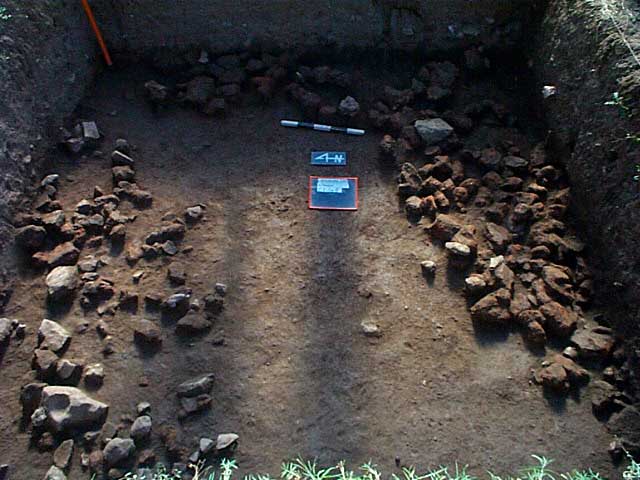
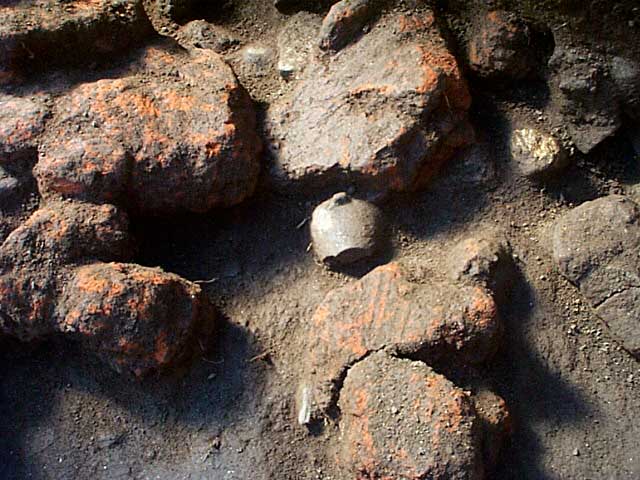
The ruins of burnt Late Neolithic houses with broken pots and numerous chickpea seeds were documented in trenches 1 and 2. The Early Neolithic settlement at Ploshteko demonstrates strong connections to sites in North Macedonia to the west – mostly Anzabegovo I in the valley of Bregalnitsa. The Late Neolithic occupation in turn mostly has the characteristics of Vinča culture spreading north-westwards while maintaining certain contacts with the area of Akropotamos-Topolnitsa culture extending all the way south to the Aegean coast.